Skip to content
VascularPublished: October 2024Updated: 7 min read

Deep Vein Thrombosis: Prevention, Diagnosis & Treatment

Deep vein thrombosis (DVT) occurs when a blood clot forms in one of the deep veins of the body — most commonly in the calf or thigh. It is a serious condition: while DVT itself causes leg pain and swelling, the life-threatening complication is pulmonary embolism (PE), which occurs when part of the clot breaks off and travels to the lungs. Together, DVT and PE are classified as venous thromboembolism (VTE) — the third most common vascular condition worldwide after heart attack and stroke. In Singapore, DVT awareness is growing, particularly with ageing population, rising rates of obesity, and increasing cancer diagnoses — all major risk factors.

PC

Dr. Peter Chang

Triple Board-Certified Cardiologist & Vascular Specialist
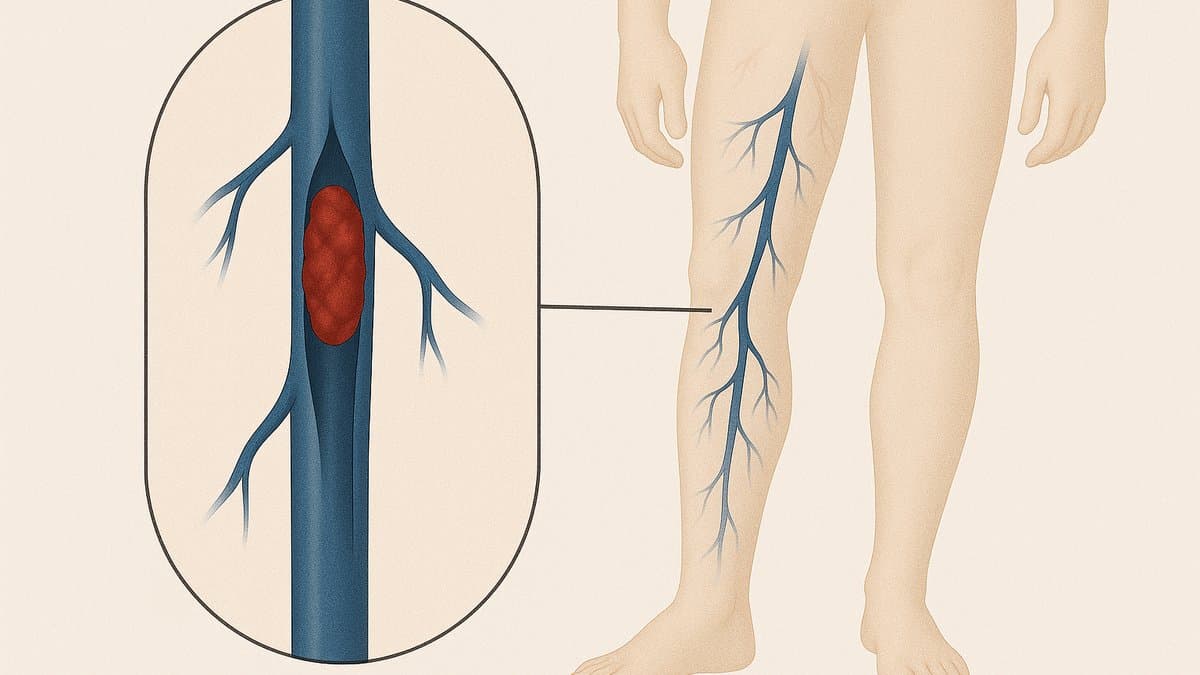
Deep Vein Thrombosis: Prevention, Diagnosis & Treatment

Symptoms of Deep Vein Thrombosis

DVT most commonly occurs in the calf, thigh, or pelvis. Symptoms, when present, include unilateral leg swelling (one leg swells, the other remains normal), pain or tenderness in the calf or thigh — often described as cramping or aching — warmth and redness over the affected area, and skin discolouration ranging from red to bluish. Crucially, up to 50% of DVTs produce no symptoms at all. The first clinical presentation may be pulmonary embolism, which manifests as sudden breathlessness, pleuritic chest pain (sharp pain on breathing), coughing up blood (haemoptysis), rapid heart rate, or in severe cases, collapse. Any sudden breathlessness or chest pain requires immediate emergency evaluation.

Who Is at Risk?

DVT develops when conditions favour clot formation — classically described as Virchow's triad: venous stasis (slowed blood flow), hypercoagulability (increased tendency to clot), and endothelial injury (damage to the vein wall). Key risk factors include:
  • Prolonged immobility: long-haul flights over 4 hours, bed rest, post-surgical recovery
  • Surgery and trauma — especially orthopaedic procedures (hip and knee replacement carry the highest perioperative risk)
  • Active cancer — increases clotting tendency 4–7 fold
  • Pregnancy and the postpartum period
  • Oral contraceptive pills and hormone replacement therapy
  • Hereditary thrombophilia (e.g., Factor V Leiden, Protein C or S deficiency)
  • Age over 60
  • Obesity
  • Previous DVT or pulmonary embolism

How DVT Is Diagnosed

Clinical assessment alone is unreliable — DVT cannot be confirmed or excluded by symptoms and examination. The Wells Score is used to estimate pre-test probability and guide investigation. A D-dimer blood test is highly sensitive but non-specific: a negative result in a low-probability patient effectively excludes DVT, while a positive result requires imaging. Compression duplex ultrasound is the definitive diagnostic test — the affected vein fails to compress fully under probe pressure, confirming thrombosis. For suspected pulmonary embolism, CT pulmonary angiography (CTPA) is the standard investigation.

Treatment: Anticoagulation

The cornerstone of DVT treatment is anticoagulation — blood-thinning medication that prevents the clot from extending and allows the body's natural fibrinolytic system to dissolve it over time. Direct oral anticoagulants (DOACs) — specifically apixaban, rivaroxaban, or edoxaban — are the first-line treatment for most patients. They are as effective as warfarin, easier to dose (fixed doses, no frequent blood monitoring), and have fewer serious bleeding complications. Treatment duration depends on whether the DVT was provoked or unprovoked: a provoked DVT (following surgery or immobility) typically requires 3 months of treatment; an unprovoked DVT requires a minimum of 3–6 months with a formal assessment of recurrence risk thereafter; cancer-related DVT is typically managed with indefinite anticoagulation.

Treatment: Catheter-Directed Thrombolysis and Mechanical Thrombectomy

In selected patients with extensive proximal DVT (involving the iliac or femoral veins), or when the clot threatens the limb, catheter-directed thrombolysis (CDT) or mechanical thrombectomy may be considered. These are catheter-based procedures performed by a vascular medicine specialist or interventional radiologist that rapidly dissolve or remove the clot, reduce the risk of post-thrombotic syndrome, and restore venous patency. They are not appropriate for all patients and are reserved for specific clinical scenarios.

Prevention: During Travel, Surgery, and Daily Life

DVT prevention is as important as its treatment, particularly in high-risk situations. During long-haul travel, staying hydrated, walking the aircraft aisle regularly, and wearing graduated compression stockings significantly reduce risk. High-risk travellers should discuss prophylactic anticoagulation with their doctor before the flight. After surgery, early mobilisation is the most important preventive measure, supplemented by mechanical compression devices during the operation and prophylactic anticoagulation for 10–35 days following high-risk procedures such as hip or knee replacement. In everyday life, avoiding prolonged sitting (standing up and moving every 1–2 hours), maintaining a healthy weight, and staying physically active all contribute to healthy venous circulation.

Frequently Asked Questions

Common Questions About Deep Vein Thrombosis

How do I know if I have DVT?

The most common symptoms are unilateral leg swelling, pain, warmth, and redness — particularly in the calf. However, DVT can be completely asymptomatic. If you develop sudden breathlessness or chest pain, seek emergency care immediately as this may indicate pulmonary embolism. Any suspected DVT should be assessed urgently within 24 hours.

Can DVT resolve on its own?

Small DVTs occasionally dissolve spontaneously, but this cannot be predicted reliably. Untreated DVT carries a significant risk of extension, pulmonary embolism, and post-thrombotic syndrome — a chronic condition causing persistent leg heaviness, swelling, and skin changes. All confirmed DVTs should be assessed and treated.

Is DVT a medical emergency?

DVT itself is serious but not immediately life-threatening. However, if pulmonary embolism is suspected — sudden breathlessness, chest pain, or collapse — this IS a medical emergency requiring immediate care. Any suspected DVT warrants urgent assessment within 24 hours.

Can I fly after a DVT?

Flying with active DVT is generally not recommended until anticoagulation treatment has been established and the clot is stable — typically after at least 2–4 weeks of treatment. After this period, flying with anticoagulation and compression stockings is generally considered safe. Discuss timing and specific precautions with your doctor before any travel.

How long does DVT treatment last?

Treatment duration depends on the cause: a provoked DVT (e.g., following surgery) typically requires 3 months of anticoagulation; an unprovoked DVT requires a minimum of 3–6 months with reassessment of recurrence risk; cancer-associated DVT is usually managed with indefinite anticoagulation.

↑ Back to top

Speak to Dr. Peter Chang

Specialist assessment and personalised management at Paragon Medical Centre, Singapore. Same-week appointments available.