Vascular
Peripheral Artery Disease
A circulatory problem in which narrowed arteries reduce blood flow to your limbs, usually causing leg pain.
Peripheral artery disease (PAD) involves narrowing of leg arteries due to atherosclerosis, resulting in leg pain during walking, slow-healing wounds, and in severe cases, critical limb ischaemia. The condition also signals broader cardiovascular disease risk throughout the body.
Book a Consultation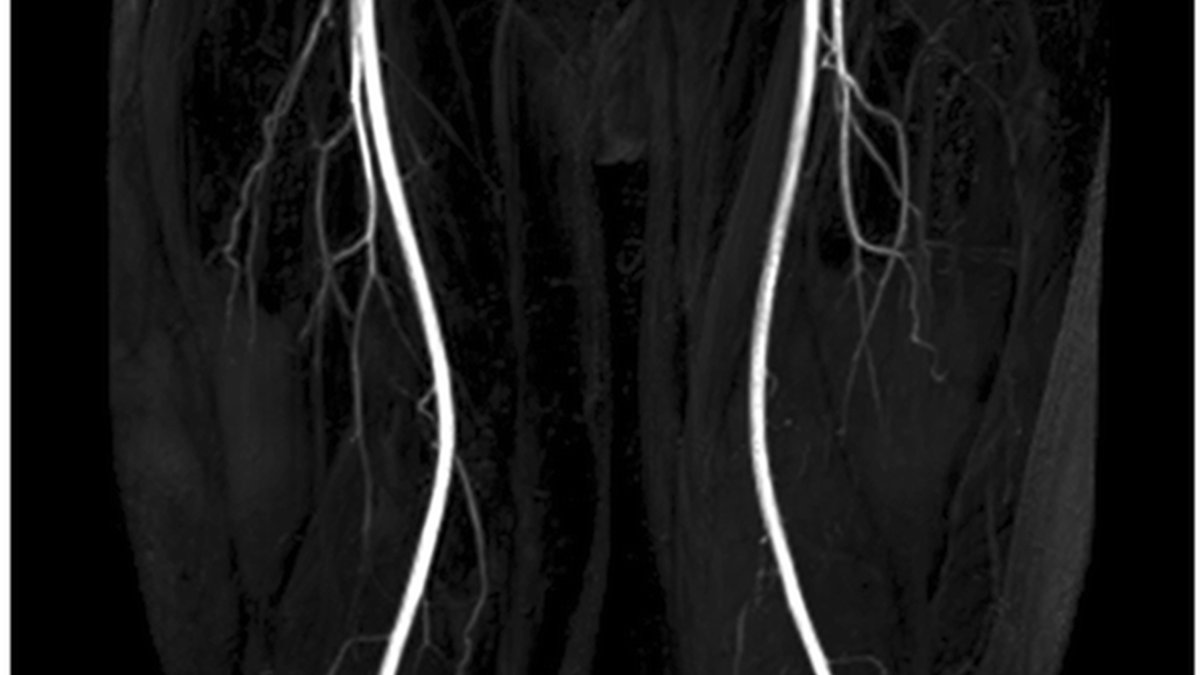
Peripheral artery disease occurs when plaque buildup narrows the arteries, restricting blood flow to the legs and causing pain during physical activity.
PAD: When Your Leg Arteries Fur Up
Peripheral artery disease (PAD) is the same disease as coronary artery disease, in a different postcode. Cholesterol-rich plaque narrows the arteries carrying blood down the legs, so the leg muscles run short of oxygen when they have to work.
Two things follow. The leg itself may hurt on walking, and in advanced disease a wound may fail to heal. But PAD also carries a message about the rest of the body: if plaque has reached the arteries furthest from the heart, it has almost certainly reached the coronary and carotid arteries too. In fact, a person with PAD is more likely to have a heart attack or stroke than to lose the leg.
Two things follow. The leg itself may hurt on walking, and in advanced disease a wound may fail to heal. But PAD also carries a message about the rest of the body: if plaque has reached the arteries furthest from the heart, it has almost certainly reached the coronary and carotid arteries too. In fact, a person with PAD is more likely to have a heart attack or stroke than to lose the leg.

The Warning Sign: Leg Pain That Comes With Walking
The classic symptom is intermittent claudication: a cramping ache in the calf, thigh or buttock that comes on after a fairly predictable walking distance and eases within a few minutes of standing still. It is muscle asking for blood it cannot get.
- Claudication — reproducible cramping on walking, relieved by rest
- Rest pain — a burning ache in the forefoot at night, eased by hanging the foot out of bed; a red flag for severe disease
- A wound or ulcer on the foot or toes that will not heal, or a foot that is persistently cold, pale or dusky
- Around half of people with PAD have no classic pain at all, particularly those with diabetes
- Erectile dysfunction can be the first sign of narrowing in the pelvic arteries
Why PAD Is Missed, Especially in Diabetes
In Singapore's flat, air-conditioned environment, many people simply never walk far enough in one go to trigger claudication, so the disease stays hidden. In diabetes there is a second problem: nerve damage blunts the warning pain, so the first sign can be a foot ulcer or an infected toe rather than an ache.
This is why we actively check the feet and the pulses of anyone with diabetes, a smoking history, or known heart disease, rather than waiting for a complaint.
This is why we actively check the feet and the pulses of anyone with diabetes, a smoking history, or known heart disease, rather than waiting for a complaint.

How We Diagnose PAD in Singapore
After feeling for foot pulses, the key bedside test is the ankle-brachial index (ABI) — the blood pressure at the ankle divided by the pressure in the arm. A value of 0.90 or below confirms PAD.
- ABI — a painless five-minute test; an exercise ABI on a treadmill unmasks milder disease
- Duplex ultrasound — maps exactly where the narrowings are and how tight
- CT or MR angiography — a detailed road map when a procedure is being planned
- Toe-brachial index — used when the ankle arteries are too calcified to compress, common in diabetes and kidney disease
Treatment: Protect the Whole Body First, Then the Leg
Because PAD signals body-wide atherosclerosis, the first job is to lower the risk of a heart attack or stroke: stop smoking (nothing else matters as much), a high-intensity statin to get LDL cholesterol below 1.8 mmol/L, an antiplatelet drug — sometimes with low-dose rivaroxaban added — and firm control of blood pressure and diabetes.
For the leg symptoms, supervised exercise therapy is first-line and works as well as a stent for claudication. The drug cilostazol can help. Angioplasty with a stent, or a surgical bypass, is reserved for claudication that genuinely limits your life despite exercise and medication, or for critical limb ischaemia. We coordinate this from Paragon Medical Centre on Orchard Road.
For the leg symptoms, supervised exercise therapy is first-line and works as well as a stent for claudication. The drug cilostazol can help. Angioplasty with a stent, or a surgical bypass, is reserved for claudication that genuinely limits your life despite exercise and medication, or for critical limb ischaemia. We coordinate this from Paragon Medical Centre on Orchard Road.
Critical Limb Ischaemia: The Emergency End of the Spectrum
When blood flow is so poor that the foot hurts at rest, or a wound will not heal, or tissue starts to die, the limb — and the person — is at risk. This is critical limb ischaemia, and it needs an urgent vascular assessment and, usually, a procedure to restore blood flow within days.
A diabetic foot ulcer with poor pulses is a same-week problem, not a wait-and-see one. If you have known PAD and develop a painful, non-healing or blackening area on the foot, seek vascular care immediately.
A diabetic foot ulcer with poor pulses is a same-week problem, not a wait-and-see one. If you have known PAD and develop a painful, non-healing or blackening area on the foot, seek vascular care immediately.

Living With PAD: Walk Through the Pain
The advice for claudication is counter-intuitive: walk into the discomfort, stop when it builds, rest until it clears, then walk again — 30 to 45 minutes most days. Done consistently, this measurably lengthens your pain-free walking distance within about three months, by encouraging small collateral vessels to develop.
- Inspect your feet daily, wear well-fitting shoes, and treat cuts or fungal infections promptly — essential if you have diabetes
- Eat a Mediterranean-style diet and keep to your statin and antiplatelet
- Keep the feet warm and moisturised, and avoid sitting with legs crossed for long periods
- See a podiatrist regularly if you are diabetic; we monitor the ABI over time from Paragon Medical Centre
Peripheral Artery Disease: Common Questions
Concerned About Peripheral Artery Disease?
Dr. Peter Chang offers specialist assessment and personalised management at Paragon Medical Centre, Singapore.