CardiacInterventional
Coronary Angioplasty & Stenting
A minimally invasive procedure to open blocked heart arteries using a balloon catheter and stent, restoring vital blood flow without open-heart surgery.
Coronary angioplasty and stenting (percutaneous coronary intervention, PCI) restores blood flow through blocked coronary arteries using catheter-based techniques — addressing angina, acute coronary syndromes, and STEMI without open-heart surgery.
Book a Consultation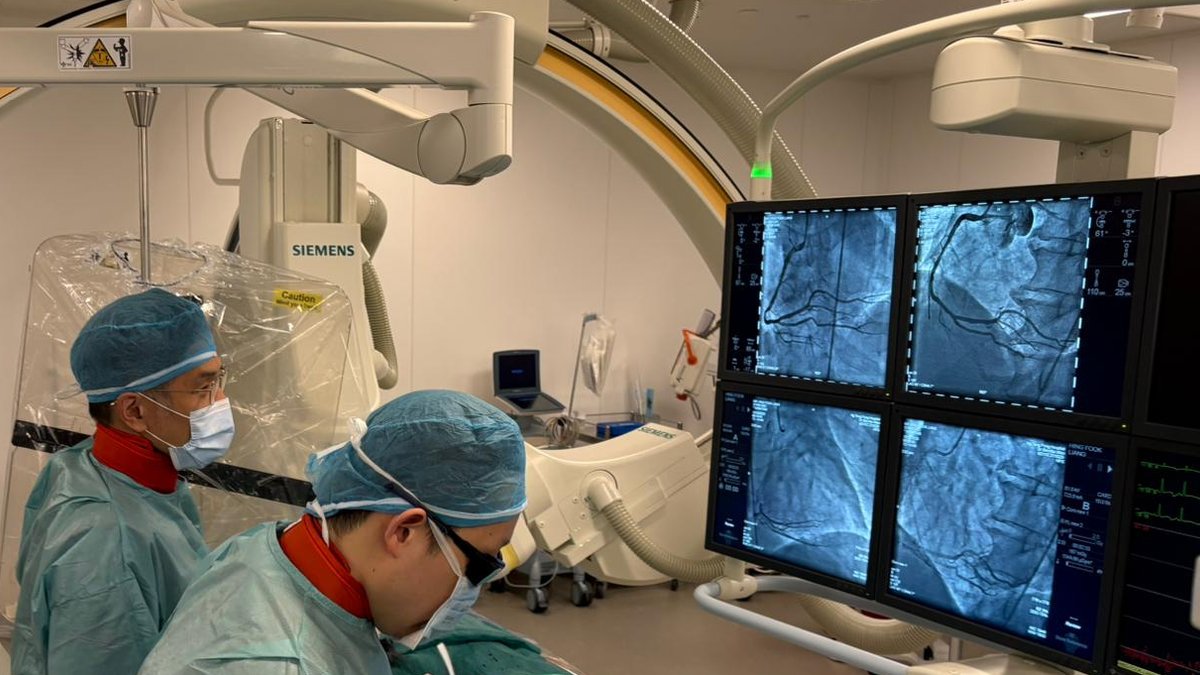
A drug-eluting stent is placed within the coronary artery to restore and maintain blood flow to the heart muscle.
Opening a Blocked Artery from the Inside
Coronary angioplasty and stenting — the formal name is percutaneous coronary intervention, or PCI — is the modern way of clearing a narrowed heart artery without opening the chest.
Working through a needle puncture in the wrist, Dr. Chang guides a fine wire and a deflated balloon into the coronary artery under X-ray. The balloon is inflated at the blockage to crush the plaque outward, and a stent — a tiny mesh tube — is left behind to hold the artery open. Modern stents are coated with medication that stops scar tissue growing back through the mesh. Blood flow to the heart muscle is restored in the same sitting.
Working through a needle puncture in the wrist, Dr. Chang guides a fine wire and a deflated balloon into the coronary artery under X-ray. The balloon is inflated at the blockage to crush the plaque outward, and a stent — a tiny mesh tube — is left behind to hold the artery open. Modern stents are coated with medication that stops scar tissue growing back through the mesh. Blood flow to the heart muscle is restored in the same sitting.

What the Procedure Is Like
You are awake but relaxed, with local anaesthetic at the wrist. Most people feel little more than pushing and a brief flush of warmth from the contrast dye. A straightforward single-stent case takes 30 to 60 minutes.
The wrist route (radial access) has largely replaced the groin: bleeding is rare, you can sit up and walk within a couple of hours, and a planned case is usually an overnight stay or even a day case.
The wrist route (radial access) has largely replaced the groin: bleeding is rare, you can sit up and walk within a couple of hours, and a planned case is usually an overnight stay or even a day case.
Getting the Stent Right
Dr. Chang often uses extra tools inside the artery to make sure the stent is doing its job:
- FFR or iFR — a pressure wire that measures whether a borderline narrowing is actually starving the muscle of blood, so that only stents that will help are placed
- IVUS or OCT — ultrasound or light-based imaging from within the vessel, to size the stent correctly and confirm it is fully expanded
- Rotational atherectomy or lithotripsy — techniques to soften heavily calcified, rock-hard plaque before the stent goes in
Angioplasty in a Heart Attack
When a coronary artery blocks completely, causing a STEMI heart attack, emergency angioplasty is the single most effective treatment. The priority is speed — every minute of delay means more heart muscle lost — so anyone with a suspected heart attack in Singapore should call 995 immediately rather than travel to a clinic. Dr. Chang works within a hospital network geared to open the artery well inside the 90-minute target.
Life After a Stent
You will take two blood-thinning tablets together — aspirin plus a second antiplatelet such as ticagrelor or clopidogrel — usually for 6 to 12 months, then aspirin alone for life. Do not stop these without asking Dr. Chang, as an early stop can cause the stent to clot. A stent fixes one blockage; it does not cure the underlying disease, so a high-intensity statin, blood-pressure control, stopping smoking and cardiac rehabilitation are what keep the rest of the arteries healthy. Most people are back to normal activity, including work and exercise, within a week of a planned procedure.
Coronary Angioplasty & Stenting: Common Questions
Considering Coronary Angioplasty & Stenting?
Dr. Peter Chang will assess your suitability and discuss all treatment options during a specialist consultation at Paragon Medical Centre, Singapore.